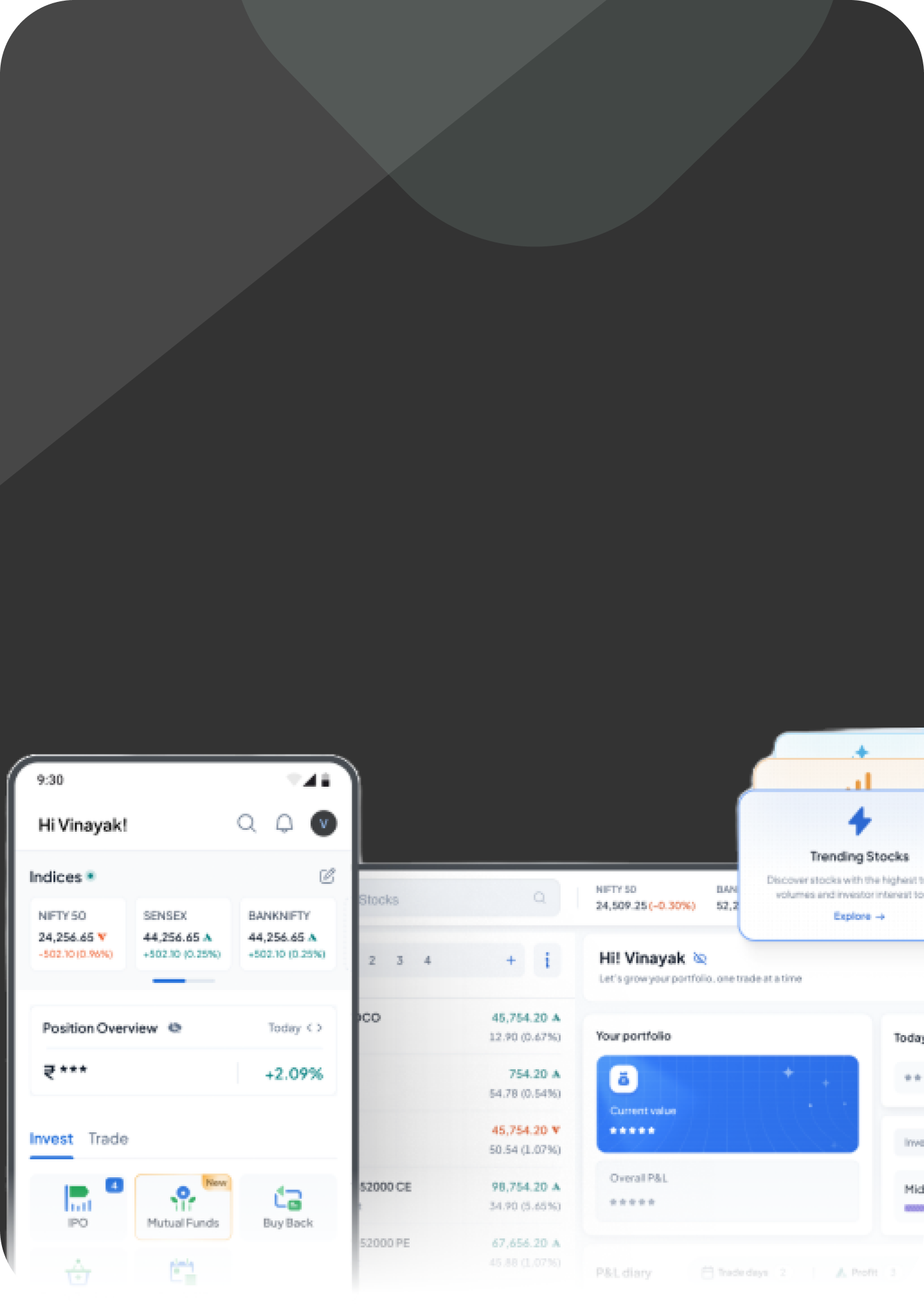




This article helps you evaluate whether robo-advisors align with your investment needs by explaining how they work, where they can support you, and where they may fall short. The aim is not to promote any single approach, but to help you make informed choices.
What Are Robo-Advisors and How Do They Work?
To assess the robo-advisors' pros and cons, you should first understand what robo-advisors are. A robo-advisor is a digital investment platform that uses algorithms to recommend or manage investor portfolios. When you sign up, you are usually asked questions about your financial goals, your time horizon, and your comfort with risk.
Based on your responses, the platform can assign you a portfolio. It is typically made up of mutual funds or exchange-traded funds (ETFs). Some robo-advisors also rebalance your portfolio automatically or make tax-related adjustments, depending on the model used.
While robo-advisors reduce manual effort, you still remain responsible for checking whether the investment strategy continues to suit your goals as your circumstances change.
Advantages of Robo-Advisors
When weighing the robo-advisors' pros and cons, many investors find the benefits appealing, particularly if they are new to investing, still on the learning curve, or prefer a hands-off approach.
Key Advantages You May Experience
Lower costs
- You may pay lower fees compared to traditional advisory services because robo- advisors rely on automation rather than human advisers.
Easy accessibility
- Many platforms let you start investing with relatively small amounts, which is what makes them accessible even if you are just beginning.
Automated discipline
- If you struggle with emotional decision-making, automated rebalancing can help keep your investments aligned with your chosen strategy.
Time-saving approach
- If you do not have the time to track markets regularly, robo-advisors can simplify portfolio management.
Example
If you are saving for a long-term goal and prefer not to monitor your investments frequently, a robo-advisor may automatically adjust your asset allocation over time without requiring constant input from you.
These benefits form an important part of the robo-advisors' pros and cons, especially for investors seeking structure and simplicity.
Limitations and Risks You Should Consider
A balanced understanding of the robo-advisors pros and cons requires you to look closely at their limitations. Automation does not always translate into flexibility.
Key Limitations You Should Be Aware of
Limited personalisation
- Robo-advisors follow predefined models, which may not fully reflect your unique financial situation.
Absence of human judgment
- If your financial priorities change suddenly, a robo-advisor cannot offer reassurance or contextual advice.
Standardised investment models
- You may be placed into broad categories that do not account for nuanced preferences.
Restricted response to unusual markets
- Algorithms operate on set rules that may not change or adapt intuitively during exceptional market events.
Example
During a market downturn, you may feel anxious and consider changing your strategy. A human adviser could help you reassess calmly, whereas an automated system will simply follow preset instructions.
These factors are central to understanding the robo-advisors' pros and cons, particularly if your financial life is complex.
Robo-Advisors vs Traditional Advice: What Should You Choose?
Comparing options side by side can help you better evaluate the robo-advisors' pros and cons relative to traditional advisory models.
| Aspect | Robo-Advisors | Traditional Advisers |
|---|---|---|
| Fees | Generally lower | Typically, higher |
| Customisation | Limited | High |
| Human interaction | Minimal | Direct and ongoing |
| Emotional support | Not available | Often provided |
| Complexity handling | Basic to moderate | Suitable for complex needs |
Some platforms also integrate features similar to robo-trading, where predefined rules automatically trigger trades. While it is efficient, such systems still rely on assumptions that may not suit every investor.
When Robo-Advisors May Suit You
Based on the robo-advisors' pros and cons, robo-advisors may be appropriate if:
- You are a first-time investor seeking simplicity
- Your financial goals are straightforward
- You are comfortable managing investments digitally
- You prefer lower costs over tailored advice
However, if you are managing multiple financial goals, tax considerations, or life-stage transitions, you may find that a purely automated approach does not fully meet your needs.
Conclusion: Choosing What Works for You
The discussion around robo-advisors' pros and cons is not about determining which approach is better in absolute terms. It is about understanding what works for you. Robo- advisors offer convenience, consistency, and accessibility, but they also come with limitations in judgment and adaptability.
By understanding how these platforms operate and recognising its strengths and weaknesses, you can decide how or whether they align with your financial goals and comfort level. If you are looking to deepen your understanding of investing concepts and market mechanisms before making decisions, Indiabulls Securities Limited (formerly Dhani Stocks Limited) provides access to educational resources and market platforms designed to support informed participation in the securities market.