


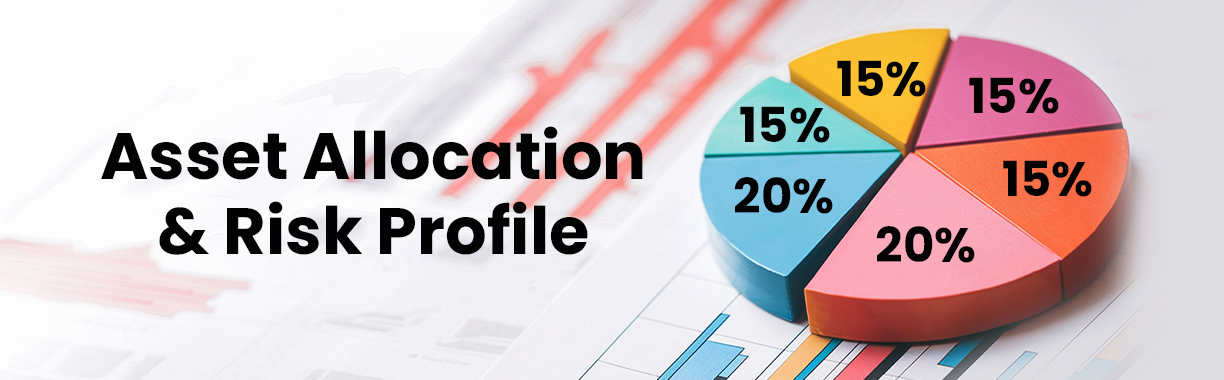
Every investor is different; the risk you take depends on how you choose to invest. Some are comfortable seeing short-term losses if there is potential for higher long-term returns, while others prefer stability even if returns are lower. This difference in behaviour and comfort is where risk profiling and asset allocation come into play. Together, they form the foundation of well-planned investing.
Understanding how risk profiling and asset allocation work can help investors make educated decisions, avoid emotional reactions during market volatility, and align investments with real financial goals rather than just assumptions.
Understanding Risk Profiling and Why It Matters
Risk profiling is the process of assessing how much financial risk an investor can take. To understand the risk profiling meaning, it helps to look beyond just age or income. Risk profiling typically considers:
- Risk tolerance: Emotional ability to handle market ups and downs
- Risk capacity: Financial ability to absorb losses without affecting essential goals
- Investment time horizon: It is the time for which you plan for your money to stay invested.
- Financial responsibilities: Dependents, liabilities, and regular expenses
Together, these factors define an investor's overall risk profile. Risk profiling and asset allocation are closely linked because once risk is understood, investments must be structured accordingly.
A mismatch, such as a low-risk investor holding mostly high-volatility assets, often leads to panic selling during market corrections.
How Asset Allocation Aligns with Different Risk Profiles
Once the risk profile is identified, the next step is deciding how money should be distributed across asset classes. This is where risk profiling and asset allocation work together in practice.
Typical Asset Allocation by Risk Profile
| Risk Profile | Equity Exposure | Debt Exposure | Cash / Liquid Assets |
|---|---|---|---|
| Conservative | Low | High | Moderate |
| Moderate | Medium | Medium | Low |
| Aggressive | High | Low | Minimal |
Each allocation reflects how much uncertainty an investor is willing to accept. Here is what you will see:
- Equities offer higher growth potential but fluctuate more in the day-to-day.
- Debt instruments provide you with stability and predictable income, though the growth is relatively lower than equity.
- Cash adds liquidity but usually delivers lower returns.
This balance ensures that risk profiling and asset allocation are not theoretical concepts, but practical portfolio decisions.
Examples of Risk Profiling and Asset Allocation in Real Life
To understand the theory, it is best explained by an example.
Consider a Conservative Investor
A 55-year-old nearing retirement depends on investments for income stability.
- Focus: Capital protection
- Allocation: Higher debt, lower equity
Here, risk profiling and asset allocation reduce exposure to sharp market swings.
Consider a Moderate Investor
A 35-year-old salaried professional saving up for retirement and other long-term goals.
- Focus: Balanced growth
- Allocation: Mix of equity and debt
This approach shows that they are moderately comfort with some volatility.
Consider an Aggressive Investor
A 25-year-old who has no dependents and has a long investment horizon.
- Focus: Long-term wealth creation
- Allocation: Equity-heavy and lower debt
In this case, risk profiling and asset allocation allow short-term volatility in pursuit of higher returns.
These examples show how portfolios differ even when the same markets apply to everyone.
Why Risk Profiling and Asset Allocation Reduce Investment Mistakes?
Many common investment errors stem from ignoring risk alignment.
Problems Caused by Poor Alignment
- Panic selling during market declines
- Overconfidence during market rallies
- Inability to stay invested for the planned duration
When risk profiling and asset allocation are aligned, investors are more likely to stay disciplined through market cycles.
Importantly, asset allocation does not eliminate risk. Instead, it ensures that the level of risk taken is intentional and manageable.
Asset Allocation Is Not Static
An investor's risk profile changes over time. Factors such as income growth, family responsibilities, nearing financial goals, or retirement can alter risk capacity.
This is why risk profiling and asset allocation should be reviewed periodically.
Situations That May Require Rebalancing
- Significant market movements
- Change in income or employment
- Approaching a major financial goal
- Increase in financial dependents
Regular reviews help ensure the portfolio continues to reflect the current risk profile, not an outdated one.
Link Between Risk Profiling and Long-Term Discipline
Understanding the risk profiling meaning helps investors accept that volatility is part of investing, not a signal of failure. When asset allocation is aligned with risk, temporary losses are less likely to trigger emotional decisions.
This is why an experienced investor will focus on portfolio structure rather than short-term market predictions. In practice assessing your risk profile and allocating assets according can act as a guardrail, keeping investment behaviour steady even when markets are not.
Key Takeaways
- Risk profiling identifies how much risk an investor can realistically take depending on their commitments and goals.
- Asset allocation translates your risk profile into a practical investment structure. It is the actual places where you will invest your funds.
- Different risk profiles lead to different portfolio mixes.
- Regular review is essential as personal circumstances change.
When applied together, risk profiling and asset allocation help investors stay aligned with their goals and financial comfort.
Conclusion
Investing is not about choosing the highest-return asset, but about choosing the right mix of assets, so that you can stay invested over time. Risk profiling and asset allocation work together to create portfolios that reflect your real financial situations rather than just assumptions or emotions. Learning about this relationship allows investors to approach markets with clarity, discipline, and realistic expectations. Consider reviewing your risk profile and asset allocation to ensure they remain aligned with your financial goals and life stage. For investors seeking to apply risk profiling and asset allocation in a structured manner, Indiabulls Securities Limited (formerly known as Dhani Stocks) offers educational resources and analytical tools to support informed investing.